A hotel bedroom needs to do several jobs at once. It should feel welcoming when a guest first walks in, provide enough storage for a short or extended stay, support work and relaxation, and remain practical for housekeeping teams to maintain.
The furniture plays a major part in achieving that balance. Poorly chosen pieces can make a room feel cramped, dated or awkward to use. Well-designed furniture, on the other hand, can improve the guest experience while helping the hotel operate more efficiently.
Modern hotel bedrooms do not necessarily need more furniture. They need the right furniture, carefully planned around the room, the type of guest and the way the space will be used.
A Comfortable and Well-Proportioned Bed
The bed is the focal point of almost every hotel bedroom. Guests may appreciate attractive décor, but the quality and comfort of the bed are likely to shape their overall impression of the stay.
The bed frame should be sturdy, well proportioned and suitable for regular commercial use. In smaller rooms, an oversized frame can restrict movement, while a bed that appears too small may make the room feel less comfortable or luxurious.
Many hotels use zip-and-link beds, which can be arranged as either a double or two singles. This gives the hotel greater flexibility when allocating rooms. The surrounding furniture should be designed to accommodate both arrangements without creating awkward gaps or blocking sockets.
The headboard is also important. It provides a visual backdrop, protects the wall and can improve comfort when guests sit up to read or watch television. Bespoke headboards may include upholstery, timber panelling, lighting, sockets or integrated bedside shelving.
Practical Bedside Furniture
Bedside tables may be relatively small, but guests rely on them throughout their stay. They provide somewhere to place a phone, drink, glasses, book or room key.
Modern hotel bedside units often need to accommodate charging points, lighting controls and electrical sockets. These features should be easy to find and use without forcing guests to move furniture or reach behind the bed.
In compact rooms, full bedside cabinets may take up too much space. A wall-mounted shelf, narrow drawer unit or integrated ledge within the headboard could provide a more efficient solution.
Storage requirements should also be considered. A small drawer may be useful, although too many concealed compartments can make cleaning and checking the room more time-consuming. The design needs to work for both the guest and the housekeeping team.
Wardrobes Designed Around Typical Stays
Hotel wardrobes vary significantly depending on the type of accommodation. A city-centre hotel serving one-night business travellers may need less storage than a resort where guests commonly stay for a week or longer.
At a minimum, a wardrobe should provide practical hanging space, accessible shelving and enough room for luggage or shoes. Full-length hanging space is useful for dresses and coats, while shorter rails may be suitable for shirts, jackets and trousers.
Open wardrobes have become common in modern hotels. They can make smaller rooms feel less enclosed and allow guests to see their belongings easily. However, some travellers still prefer closed doors, particularly when staying for several nights.
A combination of open hanging space, shelves and a closed cupboard may offer a sensible compromise. Bespoke furniture makes it possible to tailor the internal layout to the expected guest rather than relying on a standard domestic wardrobe arrangement.
Dedicated Luggage Storage
Guests need somewhere to place suitcases without leaving them on the floor or placing them on the bed. A luggage bench, rack or fitted platform can solve this problem while keeping the room more organised.
A well-designed luggage bench may also provide additional storage beneath. Drawers or open shelving can hold shoes, bags or spare bedding.
The height and depth should allow a standard suitcase to sit securely without obstructing the main walkway. The surface must also be durable enough to withstand wheels, zips and repeated handling.
In smaller rooms, the luggage area can be incorporated into the wardrobe or dressing unit. This avoids introducing another separate piece of furniture and helps maintain a cleaner layout.
A Desk or Flexible Work Surface
Even leisure guests may need somewhere to use a laptop, apply make-up, eat a takeaway meal or organise personal belongings. A compact desk or dressing surface gives the room greater flexibility.
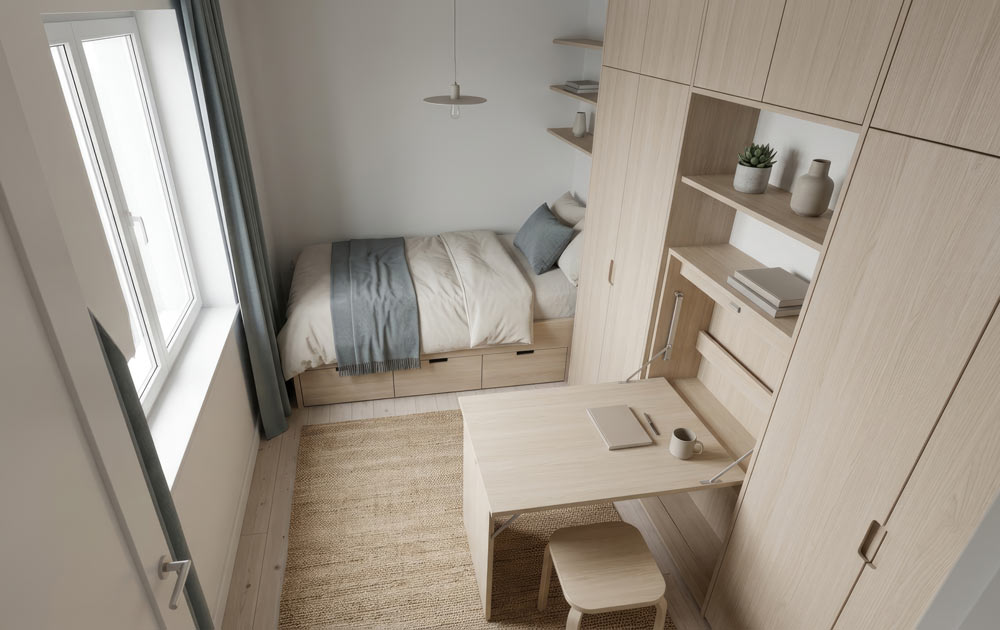
Traditional hotel desks can take up considerable floor space. In many modern bedrooms, a shallower fitted worktop may be more suitable. It can be designed around power sockets, USB charging points and cable management, helping the surface remain tidy.
The desk should be paired with a comfortable chair that can be tucked away when not in use. If the room is intended for business travellers, the chair needs to support longer periods of laptop use rather than simply looking decorative.
A mirror positioned above the work surface can allow the same area to function as a dressing table. This dual-purpose approach is particularly useful where space is limited.
Comfortable Seating
Not every hotel room has space for an armchair or sofa, but some form of seating beyond the bed is usually valuable.
A guest may want to read, put on shoes or relax without sitting on the bedding. A compact armchair, upholstered desk chair or fitted window seat can provide this option.
Suites and larger bedrooms may benefit from a small sofa, occasional table or separate lounge area. In a standard room, however, adding too much seating can create clutter and restrict movement.
The style of the seating should suit the wider interior, but durability matters just as much. Upholstery needs to withstand frequent use and regular cleaning. Darker fabrics may hide marks more effectively, although they should not make the room feel gloomy.
Integrated Television and Media Furniture
Televisions remain a standard feature in many hotel bedrooms, but the way they are incorporated can affect the overall appearance of the room.
A television fixed directly to the wall may be the simplest solution. However, wall panelling or a fitted media unit can help it feel more connected to the room design.
Media furniture may include a console, shelving, concealed cable routes or storage for remote controls and hotel information. In some rooms, a television panel can also divide sleeping and living areas.
Cable access should be planned carefully. Visible wires can make even a newly refurbished room look unfinished, while inaccessible connections can make maintenance difficult.
Tea, Coffee and Refreshment Stations
Many guests expect somewhere to prepare tea or coffee. The refreshment area should be easy to use without dominating the room.
A fitted unit can provide space for a kettle, cups, coffee machine, mini fridge and supplies. Drawers or cupboards may be included to keep items organised.
The surface needs to resist heat, moisture and occasional spills. Positioning is important too. A kettle should not sit directly beneath an electrical socket where steam could cause problems, and the unit should be located away from valuable personal items.
In higher-end rooms, the refreshment station may be concealed behind cabinet doors. This creates a more streamlined appearance, although the doors and hinges must be designed for frequent use.
Vanity Units and Bathroom Furniture
Hotel bathroom furniture should provide storage without reducing valuable floor space. A well-designed vanity unit can conceal plumbing, support the basin and provide somewhere for toiletries and towels.
Wall-mounted units may make a smaller bathroom feel more spacious and allow the floor to be cleaned more easily. Drawers often provide better access than deep cupboards, particularly where plumbing reduces the internal space.
Mirrors, shelving and lighting can also be integrated into the design. Guests should have somewhere to place personal items without balancing them around the basin.
Materials must be suitable for humid conditions and frequent cleaning. Domestic finishes that perform well in a private home may not always tolerate the demands of a busy hotel bathroom.
Furniture With Integrated Lighting and Power
Guests now travel with phones, watches, tablets, laptops and other electronic devices. Convenient charging points have become a practical necessity rather than a luxury.
Sockets and USB points should be placed near the bed and desk, where they can be reached easily. Furniture can help integrate these features without leaving cables exposed.
Reading lights may be built into headboards or wall panels. Soft lighting beneath bedside units or wardrobes can help guests move around the room at night without switching on the main lights.
Technology should remain intuitive. Complicated control panels can frustrate guests, particularly when they arrive tired and simply want to turn off the lights.
Furniture That Supports Housekeeping
Hotel furniture must work for the team maintaining the rooms as well as for the guests using them.
Furniture raised slightly from the floor may create difficult areas where dust collects. Fully fitted units can reduce these gaps, while wall-mounted furniture may make cleaning easier.
Surfaces should be durable, easy to wipe and resistant to common cleaning products. Handles, hinges and drawer runners need to cope with repeated use.
Housekeeping teams also need clear access around the bed and furniture. A visually impressive room can become impractical if narrow gaps make it difficult to change bedding, vacuum floors or inspect behind units.
Bespoke Furniture for a Consistent Interior
Bespoke hotel furniture allows each item to be designed around the room dimensions, hotel branding and operational requirements.
Wardrobes can be fitted neatly around structural features. Headboards may be manufactured to match wall panelling, while desks, bedside units and luggage benches can share the same finishes and detailing.
This consistency helps create a more considered interior. It may also allow the hotel to establish a recognisable style across different room types while adjusting dimensions and storage for each layout.
Standard furniture may be suitable for some projects, particularly where budgets or timescales are limited. However, bespoke joinery can make better use of difficult spaces and provide greater control over durability, finishes and functionality.
Creating Hotel Bedrooms That Work
The best hotel bedrooms tend to feel straightforward. Guests can find sockets, unpack their belongings, prepare a drink and move around the room without having to work out how everything functions.
Achieving that simplicity requires careful planning. Beds, wardrobes, desks, luggage benches, refreshment units and bathroom furniture all need to work together rather than competing for space.
Parkers creates made-to-measure furniture for hotels and other commercial interiors. Projects can include headboards, wardrobes, bedside units, desks, vanity furniture, reception desks, bar fittings and fitted storage. Each element can be designed around the property, the room layout and the practical expectations of modern guests.